Blog

Why Window Performance Matters More Than Window Brand

Why Window Performance Matters More Than Window Brand

When homeowners start planning a window replacement, the first question is usually about brands. Which brand is best? Which one lasts longer? Which one has the best reputation? It’s a fair question. But it’s not the most important one. What truly determines how your windows perform over time isn’t the logo on the frame. It’s window performance. And that performance depends on how the window works in your home, not how famous the brand name is. Let’s break down why window performance matters more than window brand and what homeowners should really focus on before making a decision. The Problem With Choosing Windows by Brand Alone Brand recognition feels safe. A well-known name suggests quality, reliability, and trust. But in reality, even top brands offer a wide range of products, and not all of them perform the same way. Two homeowners can buy windows from the same brand and have completely different experiences. One ends up comfortable and energy efficient. The other deals with drafts, noise, and high energy bills. The difference isn’t branding.It’s performance. What Window Performance Really Means Window performance refers to how well a window functions once it’s installed in your home. It’s not about how it looks in a showroom. It’s about how it behaves through heat, cold, rain, wind, and everyday use. True window performance includes things like: Energy efficiency throughout the year Ability to block outside noise Resistance to moisture and air leaks Durability over time Comfort inside the home A strong brand name cannot compensate for weak performance in these areas. Energy Efficiency Is a Performance Issue, Not a Brand Feature Many homeowners assume that buying a premium brand automatically means better energy efficiency. That’s not always true. Energy efficiency depends on glass quality, frame construction, sealing, and proper window installation. A mid-tier brand with strong performance ratings can outperform a premium brand installed poorly or chosen incorrectly. When window performance is strong, homeowners notice: Lower energy bills More consistent indoor temperatures Less strain on heating and cooling systems These benefits come from performance, not branding. Comfort Is Where Performance Becomes Obvious Comfort is one of the fastest ways to tell whether a window is doing its job. If certain rooms feel colder in winter or hotter in summer, the issue is often window performance. Drafts, temperature swings, and uneven comfort are signs that windows are not sealing or insulating properly. High-performing windows create a stable indoor environment. You stop noticing cold spots near windows. You stop adjusting the thermostat constantly. That day-to-day comfort matters far more than the brand name printed on the frame. Noise Control Depends on Window Performance Another overlooked aspect of window performance is sound reduction. Homes near busy streets, neighbors, or urban areas rely heavily on window performance to reduce noise. Glass thickness, spacing, and sealing all play a role. A recognizable brand won’t block noise on its own. A well-designed, properly installed window will. Durability Is Built Into Performance Window brand reputation often focuses on longevity, but durability is more closely tied to performance features. Windows that resist moisture, handle temperature changes, and maintain tight seals last longer. Poor performance leads to: Seal failure Frame warping Foggy glass Water damage These problems don’t show up immediately. They develop over time. When they do, homeowners realize that performance mattered more than the brand choice. Installation Has a Direct Impact on Window Performance Even the highest-performing window can fail if it’s installed incorrectly. Window installation affects: Air sealing Water protection Energy efficiency Noise reduction Long-term durability This is why two homes with the same window brand can have very different results. Installation quality determines whether the window performs as designed. Window performance is not just about the product. It’s about the system. Why Brand Marketing Can Be Misleading Window brands invest heavily in marketing. Features are highlighted. Awards are displayed. But marketing doesn’t always reflect how a window performs in a specific home or climate. What matters more than marketing claims are: Performance ratings Glass and frame configuration Climate suitability Professional installation A lesser-known brand chosen correctly can outperform a popular brand chosen blindly. Performance Is About Fit, Not Fame Homes are not one-size-fits-all, and neither are windows. Climate, sun exposure, moisture levels, and home design all influence window performance. The best window for one home may not be the best for another, even if both are from the same brand. This is why focusing on performance first leads to better long-term satisfaction. How Smart Homeowners Choose Windows Instead of asking, “Which brand should I buy?” smart homeowners ask better questions. They ask how the window will perform in their specific home. They look at efficiency, comfort, and durability. They consider professional installation just as important as the product itself. This approach reduces regret and improves long-term value. Final Thoughts Window brand names may catch your attention, but window performance determines your experience. Comfort, energy savings, noise control, and durability all come from performance. Branding alone cannot deliver these benefits. When planning a window replacement, look beyond the logo. Focus on how the window will actually work in your home. Performance lasts long after branding is forgotten.

Jan 22, 2026
Read More
Best Windows for Homes Near the Ocean: Salt Air, Moisture & Sun Explained

Best Windows for Homes Near the Ocean: Salt Air, Moisture & Sun Explained

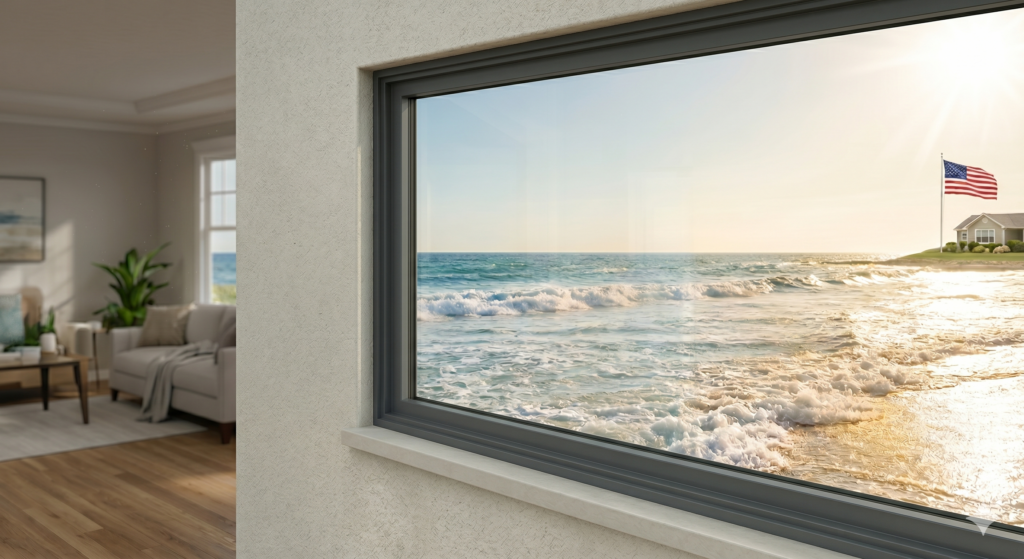
Living near the ocean is a dream for many homeowners. The views are stunning. The air feels fresh. The lifestyle is relaxed. But coastal homes face challenges that inland homes do not. Salt air, high moisture, and strong sunlight can take a serious toll on windows. Without the right materials and design, windows can corrode, warp, and fail far sooner than expected. Choosing the best windows for homes near the ocean is not about looks alone. It is about durability, comfort, and long-term performance. This guide explains what coastal homeowners need to know before replacing their windows. Why Coastal Environments Are Hard on Windows Ocean air carries salt particles. These particles settle on window frames, hardware, and seals. Over time, salt accelerates corrosion and weakens materials. Moisture is another major factor. Coastal humidity increases the risk of condensation, mold, and frame damage. Sun exposure adds to the problem by fading finishes and breaking down seals. When these elements combine, standard windows often fail much faster than expected. That is why coastal homes require windows designed to handle harsh conditions. Understanding Salt Air Damage Salt air is one of the most damaging forces for windows near the ocean. It speeds up rust on metal parts and breaks down protective coatings. Low-quality frames and hardware are especially vulnerable. Hinges, locks, and fasteners can corrode quickly. Once corrosion starts, it spreads. The best windows for coastal homes use materials that resist salt exposure and maintain their strength over time. Moisture Resistance Is Essential High humidity and moisture are part of daily coastal life. Windows must handle constant exposure without absorbing water or warping. Poor moisture resistance leads to: Swollen frames Seal failure Mold growth Air and water leaks Windows designed for coastal environments use non-porous materials and tight sealing systems. This keeps moisture out and protects the structure of the home. The Impact of Sun and UV Exposure Coastal homes often receive intense sunlight. Over time, UV rays can fade frames, weaken seals, and increase indoor heat. Windows without proper sun protection allow excessive heat gain. This makes homes uncomfortable and raises cooling costs. The right glass technology helps block UV rays while still allowing natural light to enter. Best Frame Materials for Coastal Homes Frame material plays a major role in window durability. Vinyl frames are a popular choice near the ocean. They do not corrode, resist moisture, and require minimal maintenance. High-quality vinyl maintains its shape even in humid conditions. Fiberglass frames offer excellent strength and stability. They resist warping and hold up well against moisture and sun exposure. Aluminum frames are less ideal for coastal homes unless they are specially treated. Without protective coatings, aluminum can corrode quickly in salt air. Choosing the right frame material is critical for long-term performance. Glass Options That Perform Near the Ocean Glass selection is just as important as frame material. Double or triple-pane glass improves insulation and reduces condensation. Low-E coatings reflect heat and block harmful UV rays. For coastal homes, impact-resistant glass may also be worth considering. It offers added protection against strong winds and debris while improving security. Quality glass helps maintain indoor comfort and protects interior furnishings from sun damage. Hardware That Resists Corrosion Window hardware often gets overlooked. Yet it is one of the first components to fail in coastal environments. Locks, hinges, and handles should be made from corrosion-resistant materials such as stainless steel or treated alloys. High-quality hardware ensures smooth operation and extends the life of the window. Proper Sealing and Installation Matter Even the best replacement window can fail if installed incorrectly. Coastal homes require careful sealing to prevent water intrusion. Flashing, caulking, and weatherproof barriers must be installed properly. Professional installation ensures that windows perform as designed and remain protected from moisture and air leaks. This step is just as important as the window itself. Energy Efficiency in Coastal Homes Energy efficiency is often overlooked near the ocean. But it matters. Coastal climates can be warm and humid. Energy-efficient windows help regulate indoor temperatures and reduce strain on cooling systems. Low-E glass, tight seals, and insulated frames all contribute to lower energy bills and better comfort. Choosing energy-efficient windows is both a comfort and cost-saving decision. Maintenance Tips for Coastal Windows Even the best windows need basic care. Regular cleaning helps remove salt buildup. Rinsing frames and hardware with fresh water reduces corrosion risk. Inspect seals and hardware periodically. Early detection of issues prevents costly repairs later. With proper maintenance, high-quality coastal windows can last for decades. Why Quality Matters for Coastal Window Replacement Cheap windows may look fine at first. But in coastal environments, they often fail quickly. Corrosion, moisture damage, and seal breakdown lead to frequent repairs or full replacement. Investing in windows designed for coastal conditions saves money over time. It also protects your home and improves everyday comfort. Final Thoughts Coastal living is unique. Your windows should be designed for it. The best windows for homes near the ocean resist salt air, moisture, and sun damage. They maintain comfort, protect your home, and last longer. Choosing the right materials, glass, and installation makes all the difference. If you live near the coast, window replacement is not just an upgrade. It is a long-term investment in your home.

Jan 16, 2026
Read More
How to Prevent Window Frame Warping & Seal Failure in High Humidity Environments

How to Prevent Window Frame Warping & Seal Failure in High Humidity Environments

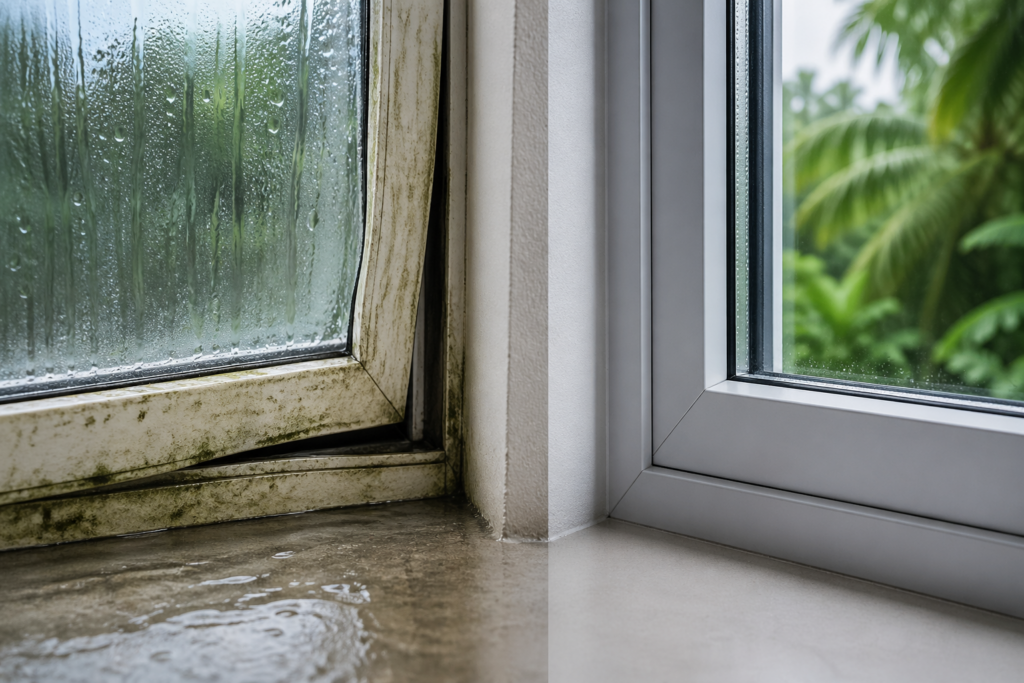
Humid climates may be harsh to a home particularly in relation to windows. The fact that moisture in the air can influence comfort is not the only problem, but in the long term, it may also cause the warping of the window frames, seal failure, condensation, and low energy efficiency. To a homeowner along the coast, in a tropical climate or in a place that has a lot of rainfall, it is important to know how humidity affects the windows to ensure that your investment and comfort in the house is not compromised. The good news? Humidity damage of windows can be prevented with the availability of the right materials, practices in installations, and maintenance habits. Why High Humidity Is Hard on Windows The moisture of air is known as humidity. In case of constant moisture content, the windows are prone to constant swelling and shrinking. This distress may undermine frames, dissolve seals and permit the entry of water. Distorted frames can make windows difficult to close or have air leakages. Seal failure- this is normally observed by fogging occurring between the glass sheets and this lowers the effect of insulation performance and may at a later stage cause apparent water damage in the area surrounding the window opening. These problems unchecked may raise the cost of energy, diminish the quality of indoor air and reduce the life of your windows. Common Causes of Warping & Seal Failure Knowing the underlying reasons is a way out of the problems in the future: Moisture absorption: There are frame materials that absorb moisture. They become distorted and swell as time goes by when subjected to constant humidity. Change in temperature: Weather temperature changes frequently with the humidity. Continuous heating and cooling strains window materials and seals even more. Poor installation: Incorrect flashing, not sealed, or improperly sized frames may permit moisture to gain entry into the areas where it is not supposed to be. Poor sealants: Seals put around windows that are not hum resistant may wear out faster causing gases to escape between the panes. Poor ventilation: This will cause more damage because the amount of condensation on the windows is high due to inadequate ventilation. Choosing the Right Window Materials The best method of avoiding warping and seal failure is to make use of materials that are constructed in a manner that enables them to work in wet conditions. Vinyl frames are very moisture resistant and they do not uptake water hence they are very popular in coastal and high humidity areas. The vinyl windows are designed to preserve their shape in difficult climatic conditions. Fiberglass frames are highly stable and strong. They are stretching and shrinking like glass and this assists in seal protection in the long run. Aluminum frames are strong but might demand thermal breaks and protective coating in damp places to avert corrosion and condensation related problems. Wooden frames are beautiful but they need careful sealing and maintenance. Wood is prone to swelling and warping when it is not taken care of. Importance of Proper Installation Even an excellent window may stop functioning properly when it is not properly installed. The installation is also done by professionals so the moisture barriers, flashing and all the sealants are laid correctly to prevent water intrusion. The major factors of installation are: Proper sizing of windows to avoid frame stress Good and moisture-proof sealants Flashing to keep water off the structure Close, tight, to prevent distortion of the frame An installed window forms a powerful protection against the invasion of moisture at the initial stage. Managing Indoor Humidity Levels It is not just the windows that need to be taken care of to prevent damage; by that it means keeping the moisture at bay indoors. Some of the basic measures that can be taken by homeowners are: Installation of exhaust fans in kitchens and bathrooms Turning on dehumidifiers in humid seasons Having adequate attic and crawl space ventilation Regulation of air in the house through maintenance of HVAC systems Maintaining indoor humidity has the benefit of preventing condensation as well as seals around windows so that moisture does not have such a long time to be exposed. Routine Maintenance Makes a Difference Periodic checks can be used to identify minor problems before they become expensive to fix. Look for signs such as: Glass to glass condensation Framing material can be soft or discolored Difficulty opening and closing windows, drafts Fractured or missing sealant To extend the life of windows in wet climates, cleaning window tracks, inspecting drainage paths, and resealing where necessary can all go some way towards greatly increasing the life of the windows. Long-Term Protection Starts with Smart Choices Being so humid does not necessarily mean that you have to have a problem with the windows all the time. The use of moisture-resistant materials, professional installation, the regulation of humidity in the house, and observing the condition of maintenance are all factors that contribute to avoiding the warping of frames, as well as the failure of seals. Homeowners living in humid or coastal areas may find that an investment in the correct windows at the present can save them by saving them costly refurbishment and inconvenience in the future. Ready to Protect Your Windows? When you are worried about the effect of humidity on the existing windows and or even when you are going to upgrade your existing windows you can contact ClearMax® Windows and Doors. Our team deals with high-performance replacement windows, which are recommended to be installed in difficult climates. Ready to upgrade your home without the guesswork? Get an instant quote and buy windows online from ClearMax® and see exactly what your project will cost in minutes. It’s fast, transparent, and designed to help you make the right decision with confidence, no pressure, just real value.

Jan 2, 2026
Read More
Tips for Maintaining Your Patio Doors and Keeping Them Smooth & Leak-Free

Tips for Maintaining Your Patio Doors and Keeping Them Smooth & Leak-Free

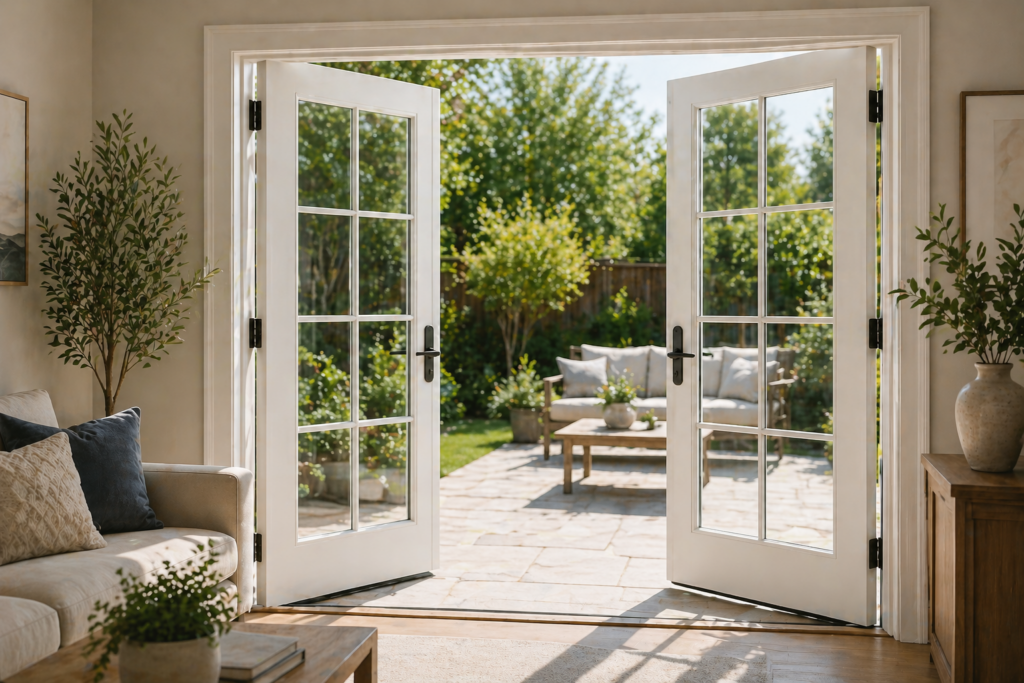
Patio doors contribute significantly toward the comfort of your house, energy saving as well as daily convenience. Having either sliding glass doors or hinged patio doors, it is necessary to maintain them to ensure that they continue to run well, seal well, and to look excellent after several years. The good news? It does not need any professional equipment or significant time investments to keep up with your patio doors. By adopting some of the easy habits and doing some seasonal check-ups, it is possible to avoid leaks, minimize wear, and prolong the life of your doors. These are steps of maintaining smooth, secure and leak free patio doors. Step 1: Keep Tracks Clean and Debris-Free The dirt accumulated in the track is one of the major causes of patio doors to be sticky or heavy. What to do: Clean the track with a vacuum cleaner to get dust and sand and tiny debris. Loosen grime with a soft brush or an old toothbrush. Wipe the track using a damp cloth and mild soap as necessary. Use of severe chemicals that may harm finishes or seals is to be avoided. A neat track enables rollers to move correctly and it avoids early degradation. Step 2: Lubricate Moving Parts (The Right Way) Lubrication is used to keep the patio doors sliding smoothly after removing the tracks. Best practices: Apply a lubricant made of silicone (not grease or oil). Apply to a small extent on tracks, rollers and hinges. Clean off the surplus to avoid dirt. Excessive lubrication may lead to accumulation hence less is more. This action will not only be able to significantly enhance door performance. Step 3: Inspect and Clean Door Rollers Patio doors have to be supported at all times by rollers. Check for: The sound of grinding or squeaking. Uneven sliding or dragging Visible wear or rust In the case of the rollers, making them adjustable will allow you to perfect the height to make the door sit perfectly in the track. Damaged rollers must be changed in order to prevent damages to tracks. Step 4: Examine Weatherstripping and Seals The initial step in the prevention of air leaks, moisture intrusion, and drafts is to weatherstrip. Look for: Cracks, brittleness, or gaps Loose or compressed seals Passage of light or air through closed doors. In case of torn weatherstripping, it is better to replace it in time to ensure the comfort of the indoors and the absence of any water damages in case of rainy or humid seasons. Step 5: Check for Water Leaks and Drainage Issues The patio doors have small drainage holes or weeps to get the water out. Maintenance tips: Clear away drainage holes of debris. Test the sill after a rain by seeing if it is standing water. Check flooring inside the house to check moisture. Drainage clogs may cause leakages, floor warping, and development of moulds when it is not repaired. Step 6: Clean and Inspect the Glass The maintenance of glasses is not just only about looks; it assists you in detecting the problems at early stages. What to watch for: Fogging between the panes (void of seal failure) Chips or cracks along edges Floating or broken glazing seals. Wipe glass using non-abrasive cleaners to prevent scratching of low-E coating. Step 7: Tighten Hardware and Test Locks With time, handles, hinges and locks may loosen through frequent usage. Do a quick check: Tighten visible screws Test locks to allow easy engagement. Make patio doors close up fairly and safely. When aligned appropriately, security is enhanced and the door will seal well when it is shut. Step 8: Know When Maintenance Isn’t Enough With the patio door, maybe it is time you thought about replacing it even after doing routine maintenance, it remains to be stuck, leaks or seems to be drafting. Indications that it might need an upgrade: Constant inundation or groundwater infiltrations. Distorted frames or broken tracks. Problem with opening or closing even when they are fixed. Rising energy bills Current patio doors have better insulation, smooth functioning, and increased security than the older models. Final Thoughts Regular services ensure your patio doors operate well, your house is not leaked, and your energy consumption is maintained. Several minutes of attention every season will ensure that you do not spend money repairing and replacing your equipment at the last moment. When you are thinking of the upgrade or you require expert advice, the ClearMax ® Windows and Doors provide high-endurance, performance, and even more so on style patio doors. Need to Upgrade Your patio doors? Shop Patio Doors

Dec 17, 2025
Read More
How to Evaluate the Warranty of Your Windows — What’s Worth It and What’s Not

How to Evaluate the Warranty of Your Windows — What’s Worth It and What’s Not

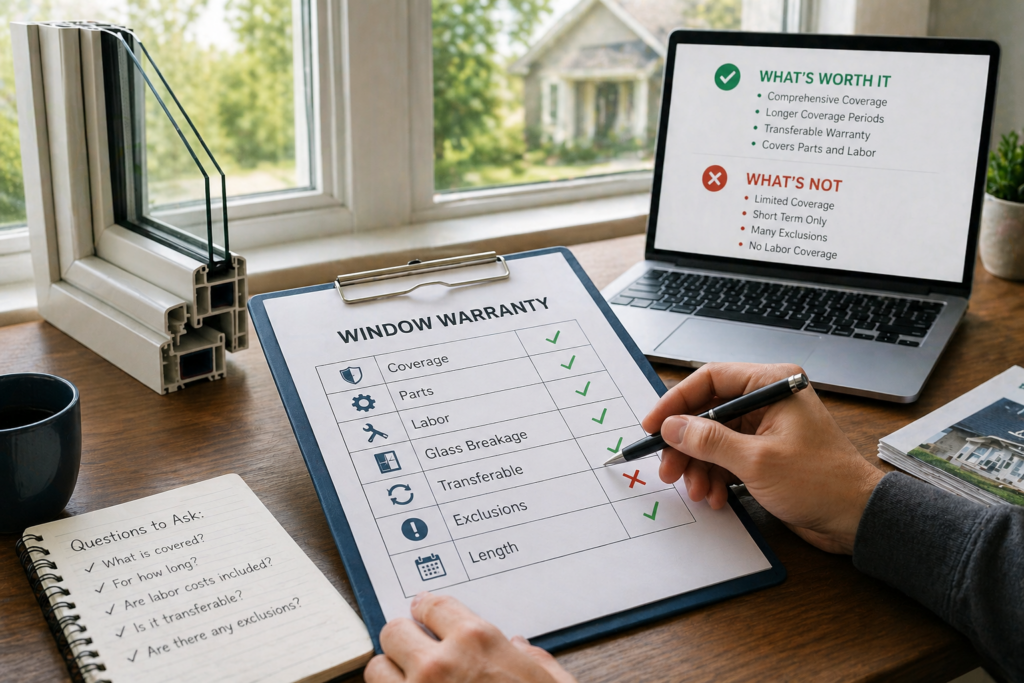
Most homeowners are keen on the style, energy consumption and cost when investing in new windows. There is also one of the most significant factors, as they have frequently been neglected, the warranty. A good warranty of the window will save you several years, whereas the weak one will cost you the money to make some repairs, which should have been paid by warranty. Awareness of what an effective window warranty is worth to you will allow you to prevent expensive surprises and can also guarantee you that what you are paying protection over your home is actually worthwhile. This is what to keep in mind when analyzing window warranties, and what is not typically as good as it is hyped up to be. Why Window Warranties Matter More Than You Think Windows are long term investments. They are exposed to weather, temperature, moisture and wear on a daily basis. High quality windows get problems with time, that is why a good warranty is important. A proper warranty would leave you assured that in case of failure of the product because of a defect, you would not be faced with the cost of repair. It also reveals that the manufacturer is a guarantor of the quality of their windows. However, not all warranties are as protective as they may claim and others are more of a marketing tool than a protection. What a Good Window Warranty Should Cover The best warranties will be the ones that will cover the actual and expensive problems that can be encountered by the homeowners. The following things are usually worth having: Coverage for Glass Failure  Good warranty normally encompasses the failure of the seal between two or three panes of glass. This prevents fogging, misting between windows and energy wastage. Frame and Material Defects  Check whether the warping, cracking, rotting or structural problems of the window frame are covered under normal use. Hardware/ Operating Parts  Covering should be done on locks, balances, hinges, and handles. They are some of the high-use parts, which may wear with time. Clear Timeframes  An excellent warranty displays the duration of the coverage and the coverage of which parts. Long term or lifetime warranty could be a sign of increased confidence in the product. What’s Usually Not Worth Paying Extra For Not all things promoted as a value added warranty benefits give actual value. Unnecessarily restricted Labor Protections  Most of the warranties are part-only warranties. It entails that you can still cover the cost of service. A warranty that covers both parts and labor during a reasonable length of time has a higher practical value. Confusing Fine Print  When the warranty is clogged with exceptions, terms and technical jargon, then it appears not to be as effective when you need it most. Transferability Restrictions  There are ones that are only valid to the original resident, and therefore are no longer valid in case of selling your home. Warranties that can be transferred are more useful particularly in resale. Short-Term ‘Extended’ Add-Ons  Watch out on high prices of add-ons which merely add a few minutes of coverage or whose additional advantages are minimal. The Questions You Should Always Ask Before Buying These are the main questions to ask before deciding on any window purchase: What is included in the cover of glass, frame, hardware and labor?  • What is the duration of every element of the warranty?  • Can I transfer the warranty in case of the sale of my home?  • What voids the warranty?  • Does the warranty need professional installation in order to remain valid? Proper responses to these questions will save confusion in future. Why Professional Installation Matters for Warranty Protection The most outstanding warranty can be canceled in the case of improper installation of the windows. Numerous manufacturers have made it mandatory to be professionally installed in order to be covered. Leaks in the air, damage to water, structural defects are some of the problems that may be caused by improper installation that cannot be addressed by the warranty in case it was not installed in the proper way. By selecting a reliable and qualified window company, you will be safeguarding your product and your warranty. How to Know If a Warranty Is Truly Worth It An effective warranty of window must be: ✔ Easy to understand  ✔ Clearly written  ✔ Reasonably long-term  ✔ Real-life issues are included.  ✔ Backed up by a well-known manufacturer. When a warranty is described in an impressive manner but is not specific or actually safeguarding, it might not be worth the price. Final Thoughts A window warranty is not merely paper work, it is an investment in your investment. Now is a good time to invest the time to know what is included or excluded to avoid wasting time, money, and stress in future. When making a comparison of a window option, do not only look at the product. Check the safeguard it has to offer. Have Questions About Window Warranties? Choosing the right windows is important, but understanding the warranty behind them matters just as much. A reliable warranty can help protect your investment and give you confidence that your windows are built to last. At ClearMax Windows & Doors, we help homeowners understand the differences between warranty coverage, product quality, and long term value so they can make informed decisions without confusion or pressure. Call us today to learn more about our window replacement solutions and discover durable, energy-efficient products backed by dependable warranty protection. +1-858-220-1179

Dec 15, 2025
Read More
What to Expect During the Window Replacement Process: Step-by-Step Timeline

What to Expect During the Window Replacement Process: Step-by-Step Timeline

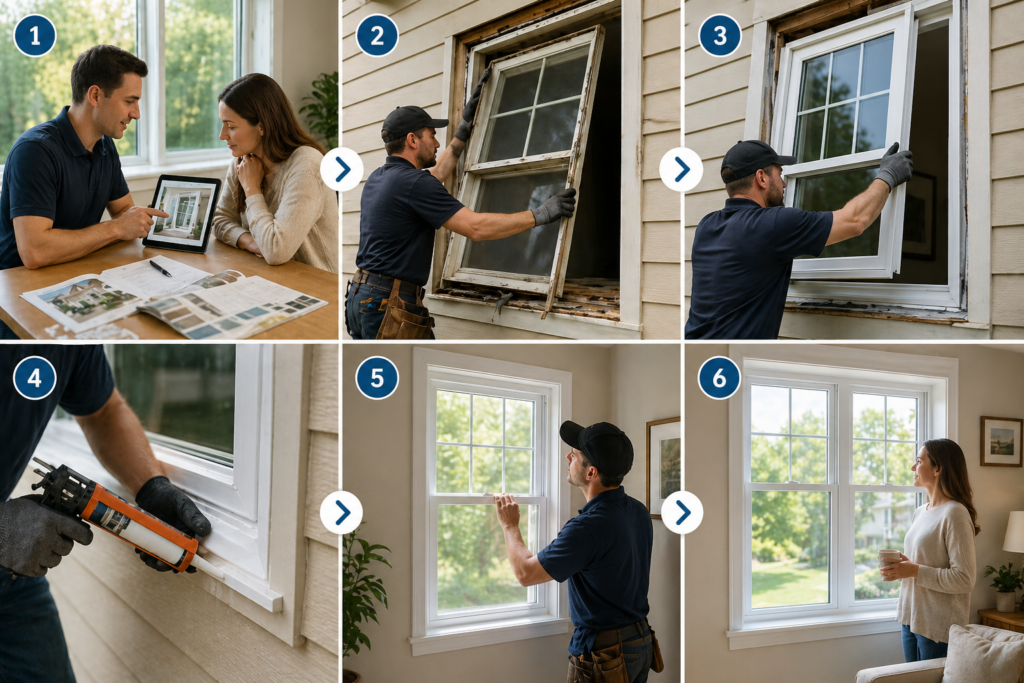
One of the best home improvements you can make is replacing your windows. New windows can improve comfort, boost energy efficiency, enhance curb appeal, and increase the long-term value of your home. For many homeowners, however, the window replacement process is unfamiliar, which can create uncertainty about what to expect. Understanding each step of the process can make the experience smooth, predictable, and stress-free. At our company, we proudly provide professional window replacement services exclusively for homeowners throughout San Diego, with solutions designed for the area’s unique climate and coastal conditions. Below is a clear, step-by-step timeline of what the window replacement process typically looks like. Step 1: First Consultation and Measures We start by consulting and making professional measurements of your current windows. This is important to make sure that the measurements being taken are correct so that your new windows fit correctly, work effectively, and look presentable when in place. At this stage, you will normally look at: Styles and settings of the windows Frame colors and finishes Glass selections and energy-saving Here you begin to have a project. Step 2: Custom windows ordering After the verification of designs and measurements, your windows are built to your own specifications. Since replacement windows cannot be of a one-size-fits-all nature, this stage is associated with manufacturing to a certain degree of precision. Made to order guarantees good seals, good insulation and durability. The process normally takes several weeks based on materials, type of glass and volume of orders. Step 3: Installation Scheduling Once your windows are ready, we will install it at a time that best suits you. You will have a bright schedule and expectations so that you will not have any surprises on the day of installation. At this stage, you’ll be told: Estimation of time of installation What will be the areas in the home that will be worked on Space preparation: pre-installation of installers. The majority of ordinary houses are finished within a day or two. Step 4: Professional Manufacturing Installation day: Old windows are taken down with the utmost care, and then your new windows are put up. Installers: Guard walls and floors around Remove old frames safely Install new windows, put in place and seal them. Check operations and insulation. It is not aimed at speed, but accuracy. Proper installation guarantees longevity, energy savings, and structural integrity. Step 5: Final Inspection and Cleanup After the installation is done, the team gives you a walkthrough and thorough inspection. This ensures: No problems with opening and closing of windows Seals are tight Frames are properly aligned Glass is secure and clean Every single work place is cleaned and any old materials cleared to ensure that your home is left in a better state than before. Step 6: After Sales Services The support is not terminated after installation. has quality window suppliers who offer warranty and extended warranty services to their products. You can expect guidance on: Thorough maintenance and care of windows Warranty coverage How to make changes in case modifications are necessary This guarantees that your investment will keep on adding value even in the years to come. Why the Process Matters Your home, your budget and your peace of mind are safeguarded by the use of a clear and professional window replacement process. By following the right steps, what comes out is not just new windows: but more comfort, greater productivity, and a home which looks and feels renovated. You do not need to complicate the process of replacing your windows. It is one of the most fulfilling and smooth home improvements you can make, with the proper process. Need to upgrade your windows? Buy Windows Online

Dec 10, 2025
Read More
Understanding California Energy Code Changes for Windows & Doors (2025 Update)

Understanding California Energy Code Changes for Windows & Doors (2025 Update)

California remains a leader in the development of the efficiency standards of the buildings, and the 2025 revision of the California Energy Code brings up several significant changes that will directly impact the homeowner, the builder, and the contractor. These updates will aim at saving on energy use, enhance comfort and livability of the homes, and enhance the sustainability in the long-term in areas where temperatures are rising and climate targets are growing stricter. In case you have plans of substituting your window or door in 2025, these changes will be used to make the correct decisions, and remain in line with the requirements of the states. Why the 2025 Energy Code Matters The code is reviewed and revised by the Californian Energy Commission (CEC) on a three-year basis to be in tandem with the changing energy-efficiency objectives. The 2025 cycle focuses on: Increased thermal efficiency Enhanced air sealing Better solar control More climate-zone-specific requirements. In the case of homeowners, it translates to reduced utility bills, enhanced performance of the homes, and higher value in case of selecting correct materials and products. Key Changes Affecting Windows & Doors The 2025 revision also has a series of changes that have a direct effect on window and door installations. 1. Lower U-Factor Requirements The U-Factor is used to determine the level of heat lost through a window.  The 2025 update requires: More effective glazing systems. Better frame material (vinyl, composite, aluminum with thermal breaks, etc.) More rigid compliance U-Factor ratings. This assists in decreasing the transfer of heat and enhances comfort throughout the year. 2. Stricter Solar Heat Gain Coefficient (SHGC) Limits The state is reducing SHGC thresholds in order to fight the increasing temperatures and decrease the cooling requirements.  This means: The windows have to intercept the sun's radiation Low-E coatings which perform highly are now a necessity Housing in hot climate areas will have greatly lowered cooling loads 3. Mandatory Thermal Breaks for Metal Frames The state has made an effort to enhance the efficiency of its energy consumption processes and therefore, aluminum doors and windows must have thermal breaks to ensure that heat is not transmitted or condensed. Thermal breaks provide: Better insulation Less prone to frame sweating High wind or coastal compliance. This follows the identical concepts presented in our guide on coastal windows performance. 4. Improved Air Leakage Standards The 2025 implementation strengthens the air-infiltration standards of all windows and doors. Installations must meet: Lower air-leakage rates Greater accuracy of installation standards. Effective sealing and flashing mechanisms This assures energy efficiency, safety, and comfort of homes. 5. Climate-Zone-Specific Adjustments The 16 climate zones in California experience different upsurges in demands which include: Increased performance in warmer inland conditions. New mixed climate fenestration packages Ought to have stricter rules on coastlines and wildfire zoning The first thing to do is to understand your particular zone to make choices that go with your specific zone. What This Means for Homeowners When you are planning a replacement of your window or door after the 2025 update will be in effect, expect: Improved general performance at home Improved quality of window materials Greater long-term savings More of emphasis on adequate installation The updates will make homes cooler during the summer, warmer during the winter, and more efficient throughout the year. Choosing the Right Products in 2025 As a way to be in compliance, to maximize savings, windows and doors should have: High efficiency and low U-Factor glazing SHGC control coatings were low-E Frames with in-built thermal break Introduction of high sense of weather stripping and seals ENERGY STAR certified models to be used in California homes Having an old hand will make sure that your project is completed to the new standards. Get Expert Guidance on the 2025 Code Update Navigating California’s updated energy code can feel overwhelming, but ClearMax® makes it simple. Our team helps homeowners choose the right energy-efficient windows and doors that meet or exceed 2025 compliance requirements. Upgrade your home with windows and doors designed for California’s newest efficiency standards.

Dec 9, 2025
Read More
Comparing Sound-Proofing Window Options for Homes Near Freeways or Airports

Comparing Sound-Proofing Window Options for Homes Near Freeways or Airports

The advantages of living near a freeway or airport include conveniences, attractiveness, quick travel, easy access, and liveliness. One of the disadvantages that the homeowners often complain about is noise, though. Noise pollution is a nuisance that can very easily transform into a day to day annoyance, be it the roar of the low flying aircraft or the constant buzz of traffic. The silver lining is that modern replacement window technology has made sound-proofing a lot more accessible, effective, and energy-efficient than it used to be some time ago. It is always a good thing to begin by knowing the differences between modern sound-proofing versions of windows, in case you are attempting to mitigate noise within your home. In order to help you make a choice about what is best about your house, the following is a clear comparison. The reason Windows are the most important in sound reduction The bulk of exterior noise gets into a house rather than through its walls but by the windows. The reason is that old windows usually have: Thin, single-pane glass Weak seals Standard air gaps Sound transmitting aluminum or aging frames These characteristics intensify noises instead of minimizing them around highways or airports in residential areas. The idea of modern sound-proofing windows is to avoid just that. Before choosing a window, it is important to understand the sound travel. The transmission of noise through glass is by vibration. The heavier, thicker and better insulated your window assembly, the less vibration will affect your living location. Alternative 1: Glass Laminated Windows Laminated glass is now one of the most sought-after sound-dampening measures in the homes that are exposed to noise. It operates by joining two sheets of glass with a layer of acoustics (typically PVB or EVA). This inner layer absorbs sound energy before it enters the house. Best For Homes facing: Freeways Busy intersections Schools Train lines Benefits Removes a lot of noise in the mid- and high-frequency ranges. Provides security due to the hardness of laminated glass to break. Helps block UV rays Enhances the energy performance in combination with low-E coating. Considerations Laminated glass weighs more than normal insulated glass thus good framing is of essence. It would not completely do away with deep and low frequency noise, however, it would significantly lower overall sound levels. Alternative 2: Two-Pane Windows and Bigger Air Spaces A common upgrade is the dual-pane windows although not every dual-pane design provides good sound-damping. In the case of noise-sensitive places, the air space between the two glass panes will be the most important factor. An increased distance leaves more room to be occupied by sound waves. Best For Homeowners who want better: Sound insulation Energy efficiency Temperature control Benefits Less expensive than laminated or multi pane windows. Reduction in noise when it is designed with a broader spacing Reduces heat transfer Best suited to work with fill gases, such as argon. Considerations Normal dual-pane windows with small spaces do not aid much in the reduction of sound. The bigger air spaces also work much more effectively than just using two pieces of glass. Option 3: Triple-Pane Windows In triple-pane windows, there are two layers of insulating gaps between the three layers of glass. Although such are commonly sold as energy efficient, they can be utilized to offer audible sound reduction when configured in mixed-thickness glass. Best For Homes exposed to: Frequent aircraft noise Cargo train routes Heavy nighttime traffic Benefits Strong thermal insulation Superb at the low frequency, heavy vibration noise isolating Eliminates drafts and temperature changes. Considerations The triple-pane windows are not all soundproof to the same extent. When the three panes are equal in their thickness, one should not be so well off. Mixed thicknesses (occasionally known as asymmetrical glazing) are far more effective in preventing vibrations. Alternative 4: Sound-Control IGUs (Acoustic Insulated Glass Units) The acoustic IGUs are particularly designed in such a way that they reduce the transmission of sound. These tend to incorporate laminated glass, uneven glass thickness, and air space optimization into a single, high performing system. Best For Homes within direct line of: Airports Highways Commercial districts Industrial zones Benefits Maximum amount of sound attenuation possible Made to cut across several frequencies of noise Huge vibration resistance Full enhancement of both interior comfort and silence Considerations These are high-quality, high-performing models that should be placed in homes that have extreme exposure to noise. They usually bring the greatest improvement on day one. Making the Right Decision about Your Home. Depending on the noise that you are exposed to, the best option will be to: Traffic noise (car, truck, motorcycles) → Laminated glass or acoustic IGUs. Aircraft noise (low-frequency vibration) → Triple-pane mixed density or acoustic IGUs. General noise in the city (conversation, music, playing children) --> Dual-pane and huge air gaps or laminated glass. Homes that are located along major freeways or fly paths tend to be the largest beneficiaries of the laminated glass or acoustic IGUs due to their combination of saving energy and reducing noise. Final Thoughts Besides being an annoyance, noise interferes with sleep, concentration and overall comfort. Upgrading the windows is one of the best ways of restoring peace and calm in your house. The current sound-proofing technology is very impressive and can have a great degree of enhancement in terms of being near a busy downtown street, near an airport, on a freeway, or a school. ClearMax Windows and Doors install high-performance windows which are specifically designed to be fitted in places where noise is a significant problem. We have the staff that will help you choose the best sound-control system to use in your house provided that you are willing to lower the sound volume and enhance your comfort. Do you know how to minimize noise in your house? To get professional advice and no obligation free estimate, contact ClearMax.

Nov 26, 2025
Read More
Why Window Condensation Happens And How New, Energy-Efficient Windows Can Prevent It

Why Window Condensation Happens And How New, Energy-Efficient Windows Can Prevent It

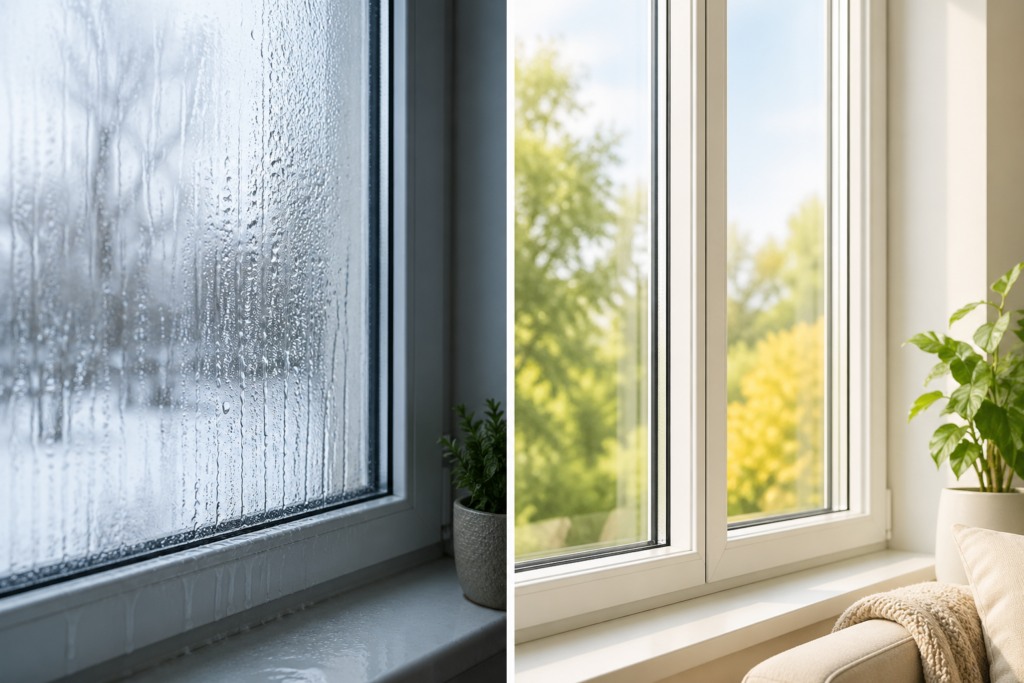
Windows are not just a place to look out; it is a way to interact between your indoors comfort and what is outside. However, once moisture begins accumulating, then that interface may become an issue. One of the most widespread problems that owners of houses are used to is condensation on windows, and it is not always a matter of bad windows. Actually, learning of the cause and the way the right replacement windows can correct the cause will see you become an even smarter customer in the long term.  The Windows Condensation: What Is the Cause? Condensation happens when hot, moist air is used in contact with a lower temperature surface and it is converted into liquid water. The dampness of the air can be found more within the regular house especially in the kitchen, bathroom or any room that is not properly ventilated. As this wet air is striking against a cooler window pane and in the winter especially the moisture is deposited on the surface of the glass or the frame creating fog, drops or even frost. Condensation will have increased chances to happen due to a number of factors: Humidity in the house: High level of moisture in the house (showers, cooking or even breathing) causes higher chances of condensation. Insufficient insulation: Single pane windows or structures which are not well sealed are not very good at retaining heat hence the inside is always cold. Air leaks: Leaks, cracks, and cracks or leaks of air to the outside of the window decrease the surface temperature of the window Poor quality spacers / seal failure: In such a window, the material (spacers) between the two glass layers and the sealant may wear over time and have less performance in terms of insulation. Something Is More Than Annoying with Condensation. Condenser appears at first, a mere touch of damp glass. However, when it is chronic, it may bring about greater ills: Mold & Mildew        The accumulation of water may support the growth of molds around the windows, particularly the frame or sill, which endangers the health and walls. Frame Damage Constant moisture can damage window frames (especially wood) or even degrade the seals over time. Reduced View & Daylight Fog and water spots block your view, reducing the clarity and brightness you paid for when choosing large, efficient windows. Energy Inefficiency If condensation is showing, it means your windows aren’t properly insulating which can lead to higher heating costs because your home loses more heat than it should. How Energy-Efficient Windows Help Solve the Problem If condensation is your problem, high-quality replacement windows from ClearMax can actually help prevent it, not just mask it. Here’s how: Improved Insulation using Multi-Pane Glass. Inert gas (such as argon) is encircled between layers to form a thermal barrier with double- or triple-pane windows. That will make the inner glass surface warmer, decreasing the temperature difference, which causes condensation. Low-E Coatings Low-emissivity (Low-E) finishes reflect the infrared heat back into the room, and are able to keep the inner pane warmer without obstructing natural light. That is precisely what ClearMax will have with its energy saving window packages. High-Quality Spacers & Seals The insulating glass unit is more stable with premium spacers (the materials which separate the panes) and strong sealant. It implies fewer thermal bridges and a reduced probability of seal failure which is a frequent cause of interior condensation. Frame Materials That Resist Thermal Transfer Vinyl and fiberglass frames tend to have better thermal performance than metal. These materials don’t sink heat or cold the way aluminum might, so the frame stays closer in temperature to the room reducing “cold spots” where condensation may form. Proper Installation Even the most efficient glass won’t do much if windows are poorly installed. At ClearMax, our professional installation helps ensure air leaks are minimized, helping preserve your home’s humidity balance and reducing condensation risk. What Homeowners Can Do Right Now to Reduce Condensation Even before replacing windows, you can take some practical steps: Use a dehumidifier in high-moisture rooms (kitchens, bathrooms) Increase ventilation by using exhaust fans, especially while cooking or showering Keep interior window coverings slightly open so air can circulate near the glass Run your HVAC occasionally in “fan only” mode to help circulate dry air Wipe away condensation regularly letting water sit can lead to damage When It’s Time to Consider Replacing Your Windows Because of Condensation You should seriously think about replacement if:The window frames of yours look wet, or they are mouldy, or swell up, or rot.  You are paying more than you should do regarding your energy bills, based on insulation and HVAC systems. You are in the process of planning a renovation or upgrade. Your replacement of the energy efficient windows with those used in ClearMax not only minimize the chances of condensation, but also increases the level of comfort, lowers energy consumption and safeguards the long term well being of your home. You regularly see fog or water between window panes that may mean the seal has failed.  Final Thoughts Condensation is not just a cosmetic pain, it is an indicator that your windows may no longer be doing a good job anymore. However, the appropriate replacement windows can transform that totally. The selection of energy-efficient glass as well as high-performing frames and appropriate installation can present a damp and foggy issue into a clear and filled-up solution. And in case of fog or moisture in the window, contact the ClearMax crew. We will guide you to a world of modern and energy-saving solutions that appear attractive and work well even after the steam haze has evaporated.

Nov 24, 2025
Read More